A Quantum Freeway Series

It was a tale of two cities. But it wasn’t the best of times and the worst of times.

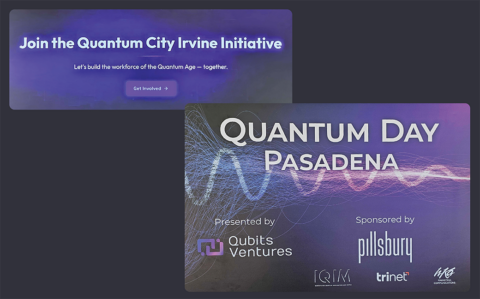
It was only the best of times, having not one, but two, World Quantum Day events to go to here in Southern California, where HKA is headquartered.

Continue reading

IYQ 2025: It’s over, or is it? 

Few would deny that 2025 was a momentous year for the quantum tech industry. 

Whether you measure technological advancements, capital pouring into both established and startup companies, or the many worldwide events tied to UNESCO’s 2025 International Year of Quantum Science & Technology (IYQ), tremendous growth was obvious everywhere.

Continue reading

Quantum’s Practical Message Arrives at CES

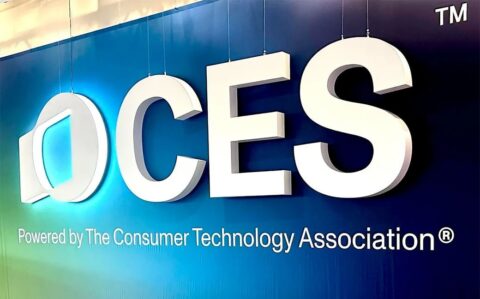
Confined for years in staid research labs, quantum technology made its presence felt amid the glittering lights of Las Vegas last week at the 2026 Consumer Electronics Show (CES).  And maybe for the first time, quantumwas widely positioned as a practical force coming soon to our daily lives.  

Continue reading

Creating a New Resource for Quantum Companies

We tentatively entered the world of quantum back in 2019. To be honest, I wasn’t sure what we were getting into. Our agency, HKA Marketing Communications, previously enjoyed several decades of successful PR work for many different industries. We were, in a word, eclectic.

Continue reading

How do you solve a quantum puzzle? 

From the topological to the philosophical, this year’s APS Global Physics Summit illuminated novel perspectives on how quantum computing can transform our understanding of the universe and how quantum ideas can play a role in our everyday lives. 

With the largest physics research conference in the world happening in Anaheim – right in HKA’s backyard – I couldn’t pass up the opportunity to meet some of the brilliant scientists deciphering the quantum puzzles that will unlock the next era of science and technology. 

Continue reading

Inspiring the Next Generation of Quantum

According to Seth Lloyd, a quantum computing expert and professor of mechanical engineering at MIT, newborn babies are the only people alive who intuitively understand quantum mechanics – something that fades as they grow older.

Until about three months old, babies engage in what can be known as A-not-B errors, demonstrating an understanding similar to concepts in quantum physics. As they begin learning to play games such as peekaboo, they shift their focus to more human-scale physics.

Continue reading

How to give a great interview: Six steps to prepare 

News flash for all enterprising quantum and deep-tech startups: publishing a press release is only the first step in announcing significant news from your company.  

Yes, it’s an adventure to get the press release just right and approved by all the right people. But the key to getting journalists and analysts to write about a new partnership or scientific advance or product enhancement is securing and conducting an interview about the announcement. This could be an email Q&A, a phone call or a video interview — any one of these formats will add context and details to your release.  

As you prepare the release, think about the best spokesperson for the news. A top executive may be your initial choice, but it’s smart to be selective about when to pull out the big guns. It’s also a good idea to make sure that people at all levels of your organization have media training and are comfortable talking to reporters. When a journalist wants a comment on short notice, you’ll have better odds of finding someone who can respond. 

Once you’ve got the release ready and the spokesperson identified, it’s time to help that person prepare for the interview. This doesn’t have to be a laborious process; a little research and a short conversation will usually do the trick. Any prep work will boost the individual’s confidence and make them more comfortable during the actual interview. 

Do a quick background check 

You don’t need to know the reporter’s credit score, but it is a good idea to scan the headlines of a few recent articles. Start with a LinkedIn search and then try the website formerly known as Twitter. Spending a few minutes perusing the writer’s professional history will give you a sense of the topics he or she has covered recently. Also, since you will likely be discussing a highly technical topic, this scan should help you determine if you should provide a 50,000-foot overview of the topic or get into more nitty-gritty details.  

If you have a PR agency or an internal PR person, they should provide you with a background brief that covers these topics.  

Prepare 1 – 2 top talking points  

If the interview is 30 minutes, you won’t have time to cover more than a few critical topics. Identify the most important messages you want to communicate. These could take several forms: 

  • Thought leadership about the direction of the industry  
  • Comments on the impact of trends 
  • Reaction to a news story 
  • Company news 
  • Explanation of a scientific discovery 

You will most likely discuss only one of these topics in a 30-minute interview. Organize your thoughts ahead of time and prioritize the subjects that are most important to cover. Review the list with your comms person or a colleague and use the feedback to refine your message. 

Don’t forget the details 

It’s good to start with the big picture, but your comments will be stronger if you can share some of the nuts and bolts as well. Details add depth to the story and make for more interesting reading. Think about your key messages and identify a few details that you can share about one of these points. Data points are often most helpful — size of a problem, number of people affected, potential market share — but any additional context is good, such as:  

  • Customer feedback that shaped a product or service 
  • Predictions for early adopters of your solution 
  • Statistics about a problem your company is solving or will solve in the future 
  • Personal experience with the topic 

You don’t have to give away any trade secrets or share TMI — just think about details you can provide to make your comments stand out in a reporter’s mind. 

Practice your replies 

It’s natural to get nervous during an interview, no matter how many or how few times you have been through the process. If you’re explaining a complex topic or describing a new direction your company is taking, write down your comments and practice them a few times. You can do this alone or with a colleague. Saying your responses aloud may help you spot awkward phrasing and make a few revisions as well. 

Keep an open mind  

It’s always good to expect the unexpected. Even when a journalist supplies interview questions in advance, they are likely to ask additional, or different questions. Be prepared for that. Do your best to reply and don’t hesitate to say, “I’ll get back to you on that,” if you don’t have an answer. The more interviews you do, the easier it will be to think on your feet and come up with good replies. 

Have an answer ready for the “Anything else?” question 

Near the end of an interview, a reporter may have a follow-up question about a topic you’ve already covered or want to explore something new. If an interviewer gives you an opening to share a final comment, be proactive and introduce a thought you want to add. Don’t worry if the topic isn’t connected to your central points — this is your chance to share information that is important to you. Your closing comments could spark a new story idea for the reporter. 

Quantum Video Tips from a TV News Pro

Quantum computing solutions will be able to fix incredibly difficult-to-solve problems. If only a quantum computer could explain, plainly and painlessly, what it is and what it will do.

Maybe it’s better that an algorithm doesn’t do that (yet), because explaining simply is what we do.

It’s just that not everybody wants to read that sort of content – many want to see and hear it. People watch an average of 17 hours of online videos per week, and 91% of businesses use video in marketing.

But how do you do video right?

Plan to Shoot

Quantum computer company Alice & Bob developed a plan around their new hardware. On the surface, this could be perceived as a boring topic, not to mention complex.

To avoid both boredom and complexity, the company’s marketing team scheduled a series of video shoots:

  1. Unloading heavy hardware – cryostats – outside
  2. Delicately connecting cooling mechanisms inside
  3. Recording slo-mo beauty shots of the machinery
  4. Setting up a two-camera interview about the tech

In an interview, a subject-matter expert is asked to explain the subject to someone who may not understand quantum tech. The dynamic is different; it becomes a conversation, not a lecture. Here the engineer speaks simply about what cryostats do and why they are important. He might have written a much more technical explanation.

Alice & Bob turned the results into an impressive unboxing video that a wider audience could appreciate, and on a relatively small, startup-company budget.

This all came about because a few executives and marketers looked at the calendar, decided to hit record and developed a video marketing plan in time for the twin machines’ arrival.

Make It Make Sense

Video can work well, whether from a modest budget carved out from a startup’s marketing spend, or a massive budget from a giant like Intel

Similarly, Intel succinctly introduces the global crises that quantum computing may address and the limitations of current computing.

Note their use of the classic coin analogy. They’d done it before and redeployed it because people get it.

As with Alice & Bob’s video, Intel’s is devoid of complex terminology and easy to understand.

Importantly, both videos were served on a bed of engaging music and topped with eye-catching imagery.

Show and Tell

I taught visual storytelling for 15 years. Here’s an oversimplified way to tell a good video-based story:

  • Concise, conversational writing
  • Creative, compelling shooting
  • Cohesive, character-driven editing

A YouTube search of “quantum computing” reveals beginner’s guides, explainers and speeches that employ animation to illustrate superposition, entanglement, amplitudes… things our eyes can’t see.

While the stuff that makes quantum quantum – so many intangibles laced with sub-atomic particles – remains very hard to visualize, quantum tech is maturing, becoming easier to see, and thus easier to show and tell what goes on in the lab or field.

Visuals help viewers wrap their heads around things. The greatest thing about video is taking what you can see and making it more interesting.

Why Video Marketing Matters

Short-form videos that show off cool new things best serve companies and consumers alike.

More people are using social platforms as search engines, too, looking for short videos so often that the search king itself, Google, is planning to add more short videos and social media posts in search results.

A well-produced, quickly consumable clip is a social-media-ready ELI5“Explain it like I’m 5.”

So, if something unique is happening, dedicate a few cameras to it, and a few hours to editing.

Considering the cone of experience – that we remember 10% of what we read and 50% of what we see and hear – viewers are 5X more likely to retain your message.

And when your video is memorable and understandable, that number will surely climb higher and be of extraordinary value to your audience – especially in the always-complex quantum world.

The Quantum Gold Rush = Job Security

I began a career in journalism 20 years ago as a production assistant in a TV newsroom, a print-scripts-and-run-them-to-the-anchor-desk gofer.

The news – and its reporters – were analog. I naively asked one of them, 20 years my senior, “How did you research stories before the internet?”

“We went to the library.”

Ohhhhhh.

(????)

I asked because I used Google to search and verify news copy, at least for national stories. Locally? Yeah, no one posted online until after their story had aired. The News was on TV.

After considering what to do about this pesky internet thing, local newsrooms began their digital transformations, and I freaked out.

Get Busy Livin’ or Get Busy Dyin’

Had the professional field I’d chosen – broadcast television – reached an inflection point? Would we all slide down the impending curve?

I rode the TV curve down as a TV producer and manager, then clawed my way up the digital curve as a news director, owning new channels, driving digital-only content, improving mobile and streaming apps, optimizing SEO and enhancing social media presence and storytelling.

It was exhausting. I jumped ship to an emerging industry – to technology public relations and quantum tech PR, marketing and communications. It’s still exhausting, but it feels great.

I know I’m not the only one making the leap.

Securing Job Security

If I learn and grow with quantum technology, quantum tech communications and quantum enterprise marketing, I am certain to have 25 years of job security ahead.

After the early 2023 tech layoffs, and ahead of any late 2023 recession, engineers, developers and other tech pros may be thinking the same:

Of course, there’s much more to quantum computing than a stable job. Quantum tech is as new and exciting as anything, drawing the most brilliant people on the planet, and we are all going to have to adapt to it for decades to come.

Quantum tech PR will be getting the word out about why and how this sea change in computing and its algorithmic alchemy will produce a new Golden Age of technology and inevitable business booms. Why not be an early member of a new reality that will touch every known industry – and create new ones in the process?